Cobalt-Chrome Dentures in Poole & Bournemouth
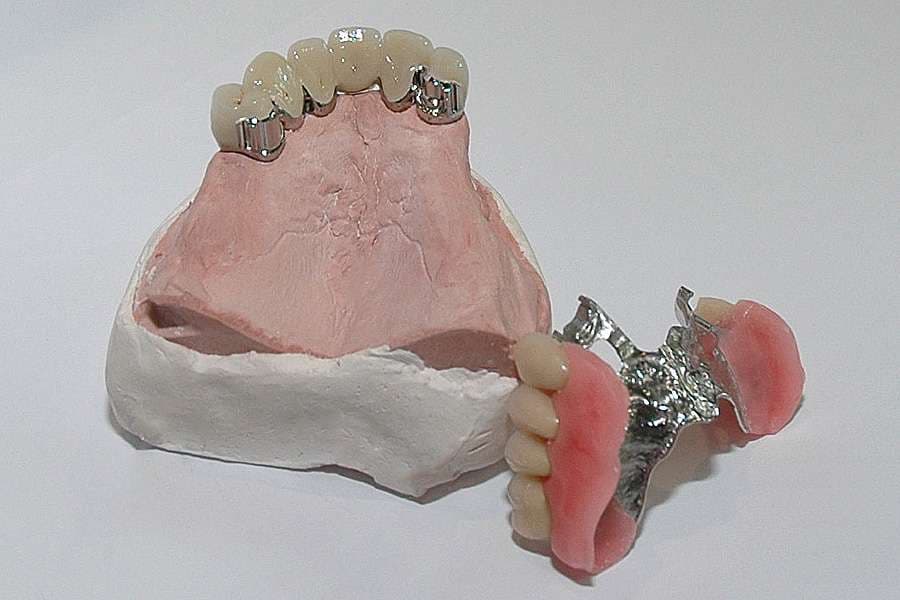
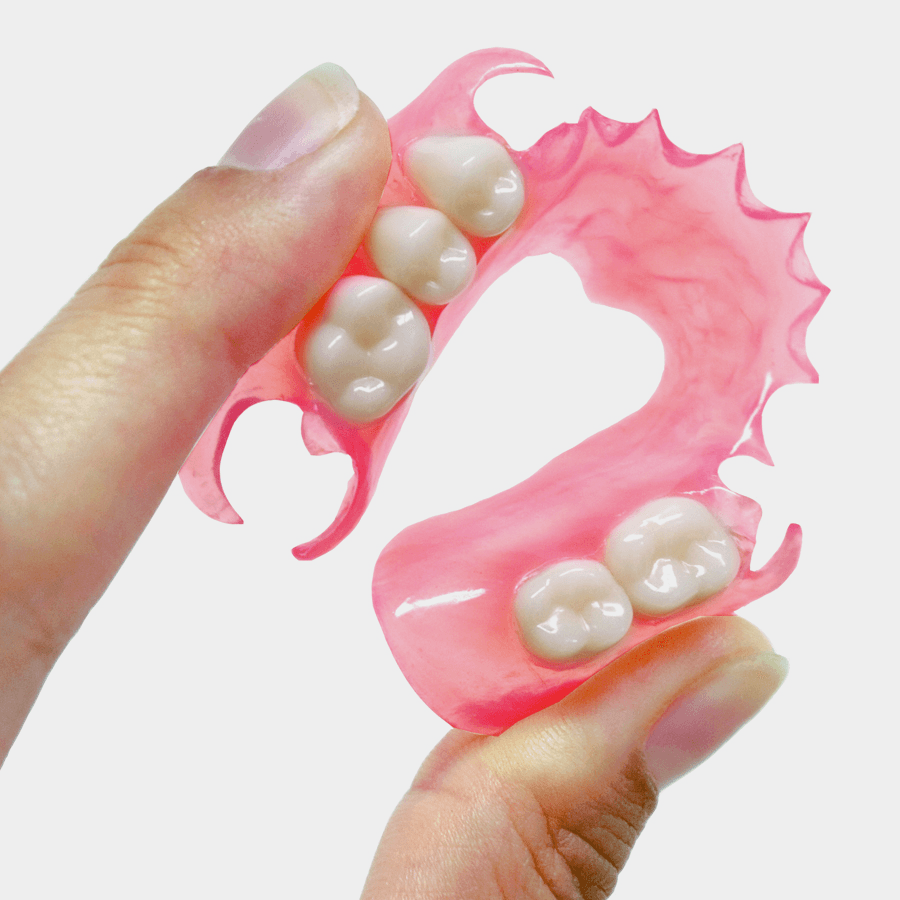
Slimmer, stronger cobalt-chrome partial dentures with clasps cast as part of the frame, stronger than the stainless steel clasps on an acrylic partial. Chrome is John's specialism, cast here in Poole.
- A laboratory 70+ years established
- Made in-house in Poole
- DAMAS accredited
- 70+ yrsEstablished laboratory
- In-houseMade on our own benches
- DAMASRegistered lab
- GoogleRated by our patients
What is a cobalt-chrome denture?
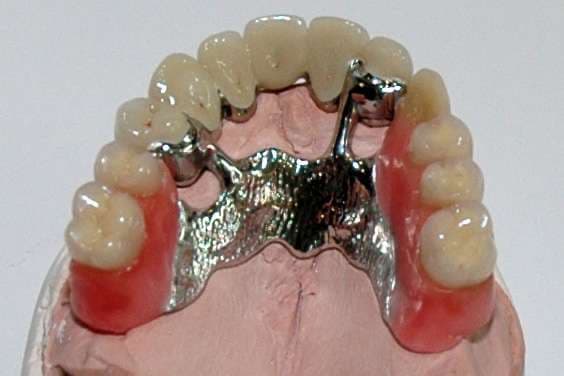
A cobalt-chrome denture is a partial denture built on a slim, cast-metal framework rather than a thicker acrylic base. It is the strongest kind of partial we make, and often the most comfortable, because it covers far less of the palate.
The frame is cast in one piece, with the clasps that hold it in place formed as part of that same casting. That is the key difference from an acrylic partial, where the clasps are separate stainless steel arms bent to shape and set into the acrylic. A cast chrome clasp is one cohesive piece with the frame, so it is stronger and more durable than a conventional stainless steel one.
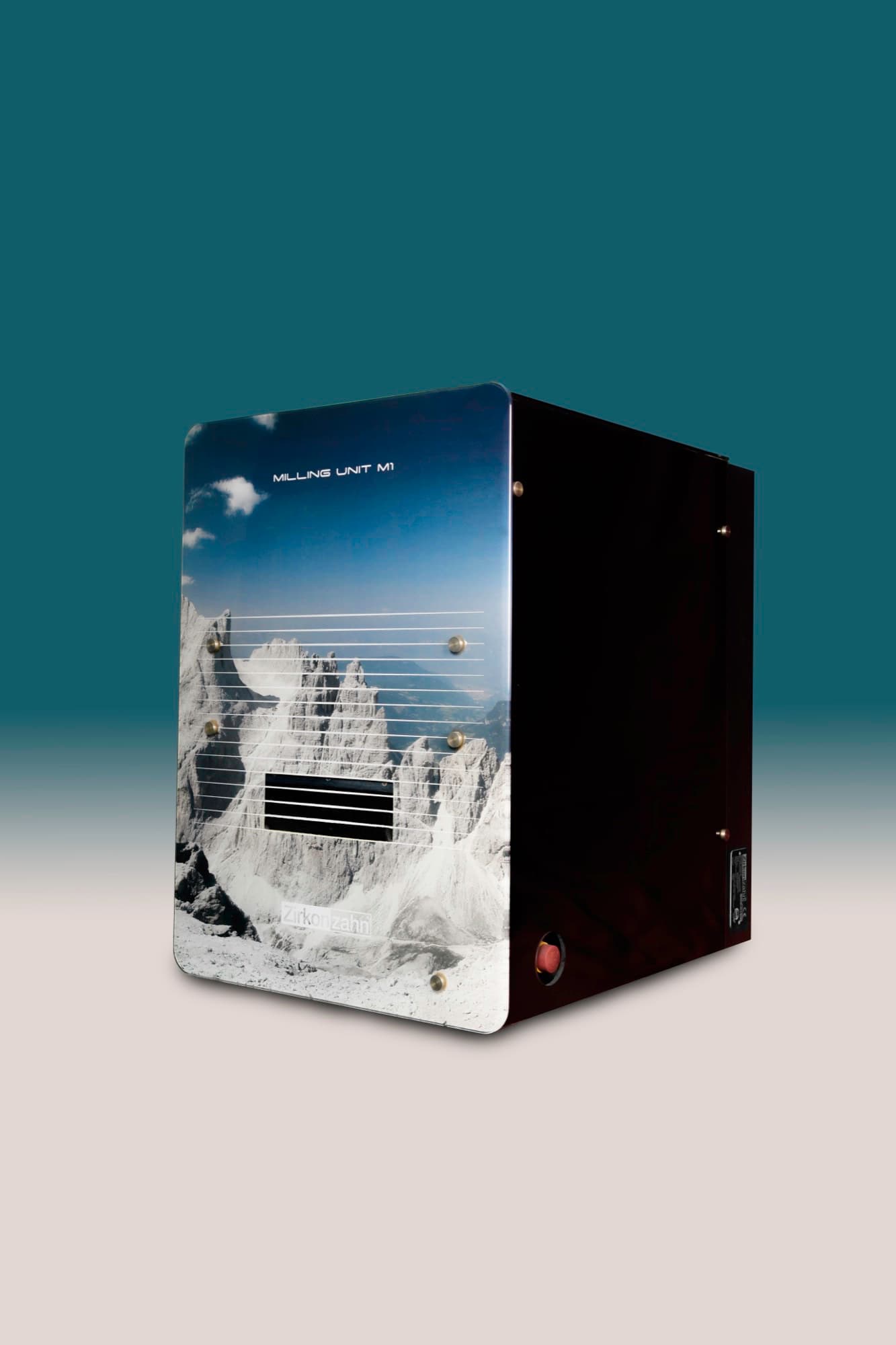
Chrome is John’s specialism and his passion. He designs these frames conventionally, working straight onto the model, or digitally on screen, whichever suits the case. The pattern is then cast in-house at over 1000 degrees in a centrifugal injector and cooled slowly so it does not distort. It is precise, demanding work, and it is what he loves doing.
What chrome dentures cost
Chrome takes more work than acrylic, including in-house casting, so it sits above acrylic. We price it to your case and give you an exact figure at your free one-hour consultation, with no obligation.
The free consultation is the no-commitment way to get your real number.
Prices are confirmed at your free consultation. See our full denture cost guide for what drives the cost.
What a cast frame gives you
Clasps cast as part of the frame, stronger than the stainless steel clasps used on an acrylic partial
Stronger for heavy or over-closed bites that break acrylic
Slimmer, with far less palate coverage, so it feels less bulky
Polished metal is self-cleaning and kinder to your remaining teeth and gums
A chrome-strap design option for a severe gag reflex
Designed, cast and finished in Poole
Design the frame, on the model or on screen
John designs the cobalt-chrome framework conventionally on your model or digitally on screen, planning the clasps and support around your remaining teeth.
Pattern and cast in-house
The pattern is waxed up or 3D-printed in castable resin, invested, then cast at over 1000 degrees in our centrifugal injector and cooled slowly to avoid distortion.
Add teeth and try-in
We set the teeth to the finished frame and you try it in wax, so you approve the look and feel before it is completed. The casting stage alone takes about ten working days.
Finish and fit
We polish the frame to a self-cleaning shine, complete the denture and John fits it, easing it so it seats comfortably.
A metal-free PEEK option when cobalt-chrome will not do
A small number of people are allergic to cobalt or chromium. If acrylic will not do the job either, we can make the framework in PEEK, a biocompatible high-performance polymer.
PEEK keeps much of what makes a framed denture good, slim and light, while being completely metal-free. It is not something most labs offer, and it is worth asking about if a metal allergy has held you back from a proper partial.
Questions about this service
No jargon, no pressure. If your question is not here, call the lab and a technician will talk it through.
Are chrome dentures better than acrylic?
When is chrome the right choice for me?
What if I am allergic to metal?
Can you get chrome dentures on the NHS?
Can you eat normally with chrome dentures, and are they comfortable?
How long do they take to make?
Find the type that fits your situation
Not sure where to start? Here's a plain-English guide to the four kinds of denture we make, and who each one tends to suit. Whichever you lean towards, John talks it through with you at your free consultation.
| Acrylic dentures | Cobalt-chrome dentures | Flexible dentures | Implant-retained dentures | |
|---|---|---|---|---|
| Best suited to | Full sets & standard partials | Strong, slim partial dentures | Small, discreet partial dentures | A secure fit for those with implants |
| Strength | Strong, stable acrylic | Strongest, cast metal frame | Flexible rather than rigid | Firm hold, clips to implants |
| Discretion | Gum-coloured base, clasps can show on partials | Slim, but metal clasps can show | Most discreet, no metal clasps | Attachments hidden under the denture |
Whichever you lean towards, John talks it through with you at your free consultation.
Related services
Book a free consultation about chrome dentures
A calm, no-pressure chat with the technician who will make your work.