
Partial Dentures in Poole & Bournemouth
A partial denture fills the gaps where you still have some of your own teeth. We make all three kinds, acrylic, chrome and flexible, and tell you honestly which one suits your case. Made and fitted here in Poole.
- A laboratory 70+ years established
- Made in-house in Poole
- DAMAS accredited
What is a partial denture, and is one missing tooth enough?
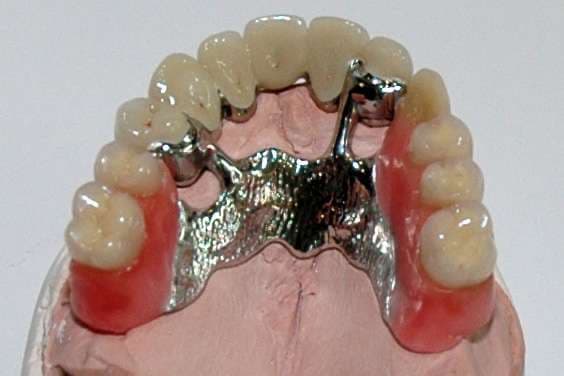
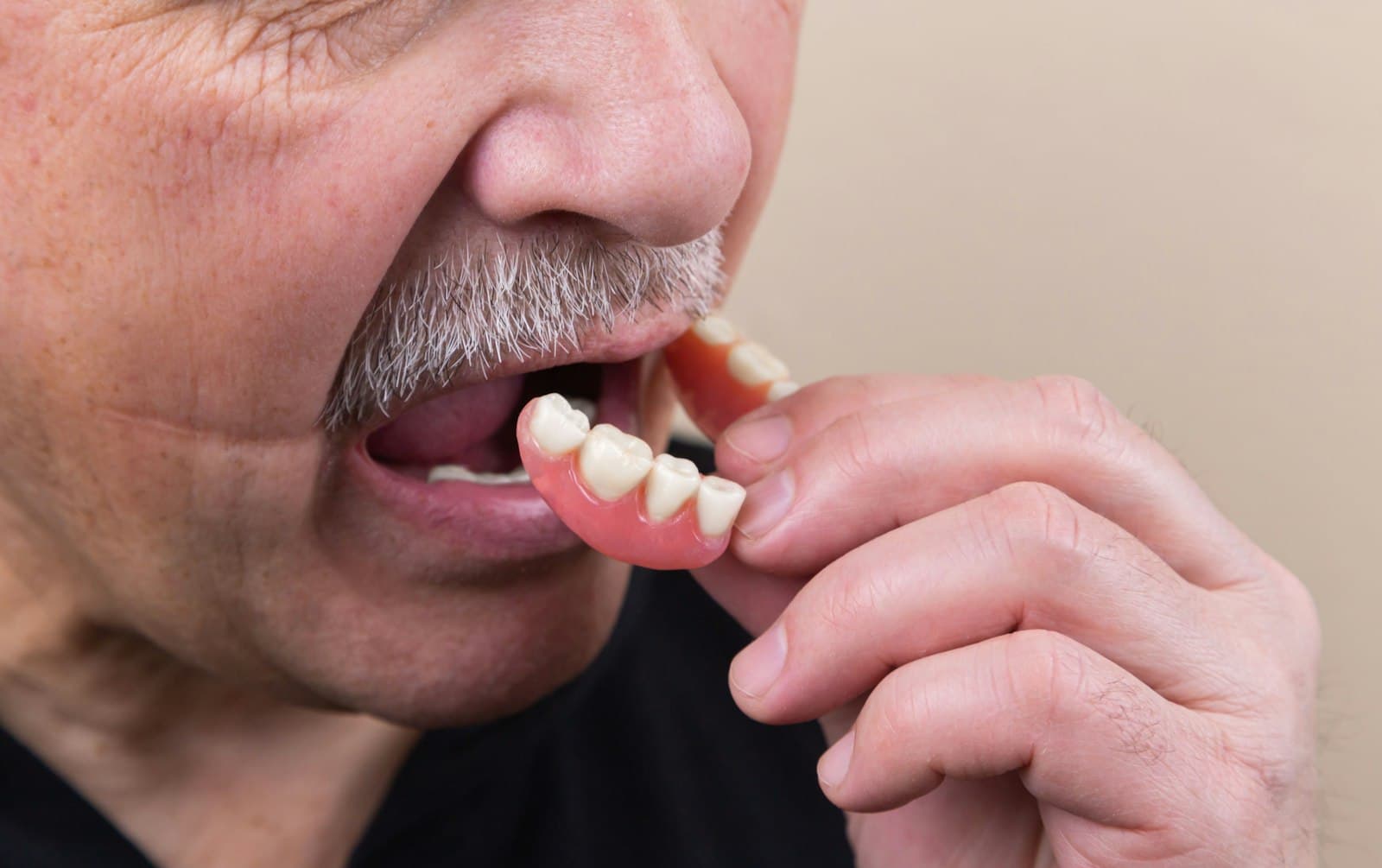
A partial denture replaces the teeth you have lost while keeping the natural teeth you still have. It is a removable plate carrying one or more teeth, shaped to your mouth and held in place by clasps that grip your own teeth. You take it out to clean it, and it fills the gap so you can bite, chew and smile normally again.
Yes, a single missing tooth counts. People often assume a partial is only worth it once several teeth have gone, and that is not true. One lost canine or premolar is a perfectly ordinary reason to have a partial made, and a small one sitting neatly to one side is some of the most satisfying work we do.
There are three materials a partial can be made from, and they are genuinely different: acrylic, cobalt-chrome and flexible nylon. Deciding between them is the only question most people arrive with, so the rest of this page answers it rather than listing all three and leaving you to guess.
What will a partial cost, and can I have one on the NHS?
Every partial is priced to the case, because a single tooth in flexible nylon and a large cast chrome frame are not the same job. What we can be straight about is what a price from us includes, and that the consultation where you get your figure is free.
Acrylic partial
The traditional partial, made by hand the flask-and-pack way. Usually the most economical of the three.
Priced at your free consultation
- Teeth, trays and bites
- Wax try-in and two retries
Cobalt-chrome partial
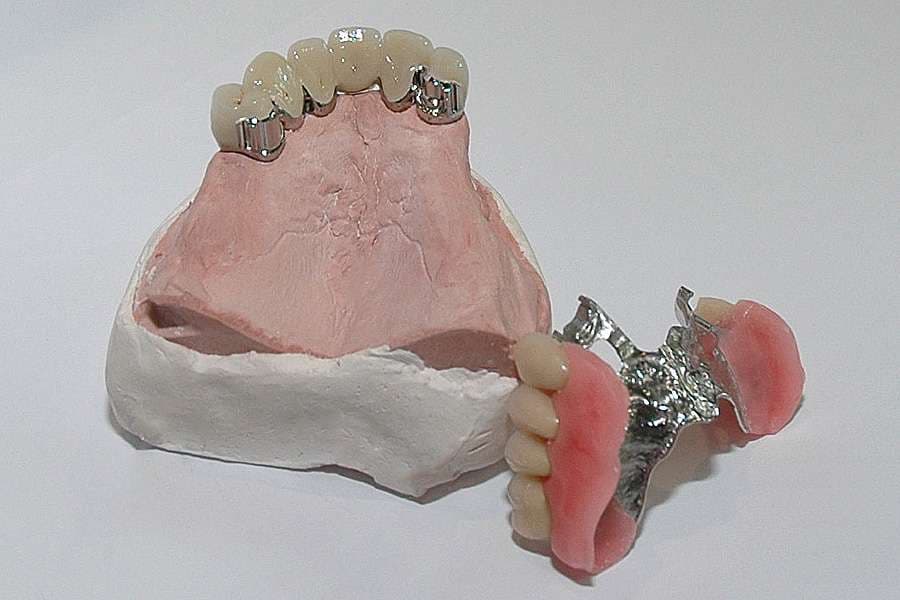
A slim cast metal frame with the clasps cast into it. More work than acrylic, so it sits above it.
Priced at your free consultation
- Frame cast in-house
- Wax try-in and two retries
Flexible partial
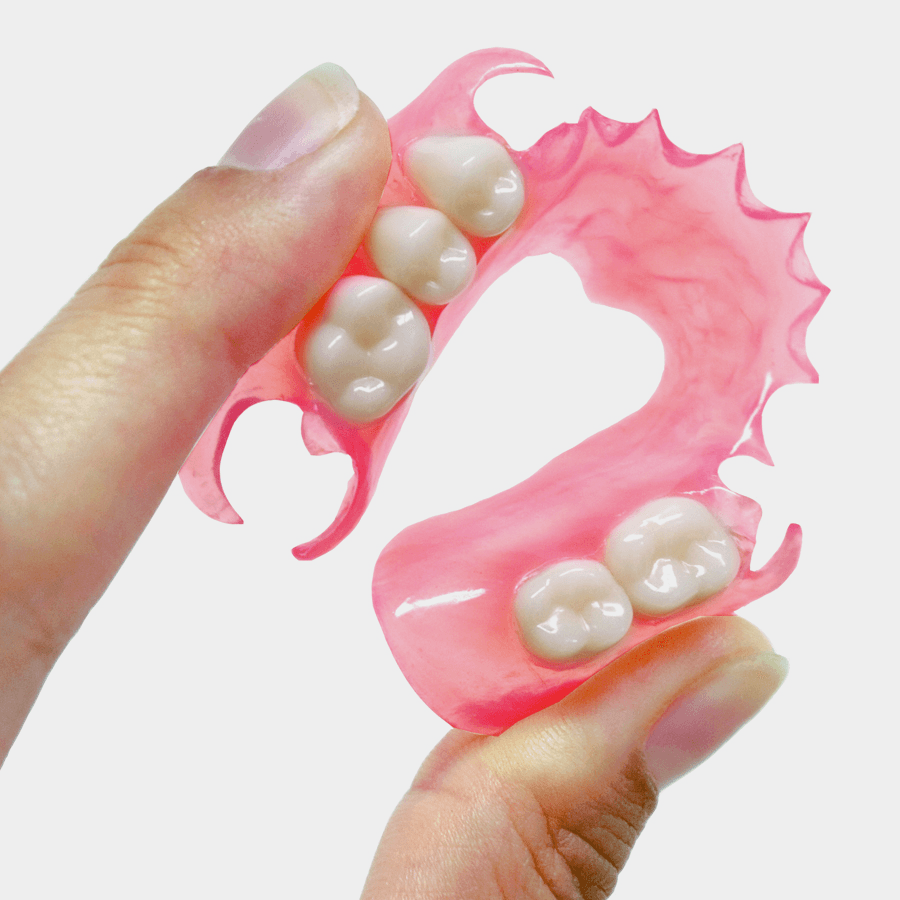
Metal-free nylon with gum-coloured clasps built in. Priced to the case, as with the others.
Priced at your free consultation
- Teeth, trays and bites
- Wax try-in and two retries
A guide only, never a quotation. We do not charge separately for the clinical steps: the teeth, trays, bites, wax try-in and two retries are in the price. On the NHS: we are a private laboratory working direct to you, so a partial from us is private. Your own dentist can tell you what an NHS partial would cover, and we will not talk you out of it.
How a partial stays put, and whether the clasps will show
One missing tooth is enough, a partial does not need a big gap to be worth having
Flexible clasps are built in and gum-coloured, so no metal shows on a front tooth
Chrome clasps are cast as part of the frame, so they are stronger than stainless steel arms
Acrylic partials use separate stainless steel clasp arms rather than clasps cast into a frame
A chrome frame covers far less of your palate, so it feels less bulky
Whichever you choose, we make it in our own lab and John fits it himself
How we make and fit your partial, and how long it takes
Free consultation
An hour with John, no obligation. He looks at your bite and your remaining teeth, and you settle on acrylic, chrome or flexible together. You leave with a real price.
Impressions and bites
We take impressions and record how your teeth meet, then make special trays for a second, more accurate one. Each stage takes about five working days.
Try-in in wax
You try the set-up before anything is finished, so you approve the look and where the clasps sit. Two retries are included, so nothing is rushed.
Finish and fit
John fits it, easing it until it seats comfortably. Most cases run about three weeks start to finish. Chrome adds time, as casting the frame alone takes about ten working days rather than five. If you genuinely cannot wait, an express service is available for a fee.
Trusted across Dorset
Real, verified reviews from our patients on Google.
19 reviews on Google
Mrs W.
Today I attended your laboratory with broken dentures; within 2 hours you had taken impressions, repaired my denture and even placed a missing tooth! An amazing service and just in time for my daughter's wedding tomorrow.
Sheila
After years of problems it is so good to have a denture that fits and to be able to eat all types of food with no problem.
Susan
I recently had to have a bridge extracted and was dreading dentures. John gave me an option of implants. My implant bridge looks so natural. I am over the moon.
Mrs H.
I had not been able to eat properly for such a long time and now I enjoy every meal. So comfortable to wear.
Miss T.
At 56 this was a huge embarrassment to me, but now I am walking around with fixed teeth, a perfect smile and able to eat healthy meals. Wonderful Wessex.
Terry
Thank you John for fitting me with a perfect small denture. It was painless and fits very comfortably.
Reviews from Google
See all reviews on GoogleA registered, accredited lab, and a named maker
John is a Registered Clinical Dental Technician, which is what lets him fit your partial himself rather than hand you on to somebody else. He has made dentures his entire career, and cobalt-chrome is his own specialism, cast here in Poole. Whichever material we recommend, it is made on our own benches by technicians you can meet.
Questions about this service
No jargon, no pressure. If your question is not here, call the lab and a technician will talk it through.
How many teeth do I need missing for a partial denture?
How much do partial dentures cost, and can I get one on the NHS?
What are the downsides of a partial denture?
Will the clasps show if it is a front tooth?
Can I eat normally with a partial denture?
How long do they take to make, and how long will they last?
Acrylic, chrome or flexible: the three options compared honestly
The question nobody local answers, so here it is. We make all three in this building, and John casts the chrome himself, so we have no reason to sell you one over another. Each card says who it suits and, just as importantly, when it is the wrong answer.
| Acrylic partial | Chrome partial | Flexible partial | |
|---|---|---|---|
| Best suited to | Straightforward partials, cost-led cases | Heavy bites, hygiene, least palate coverage | Small, discreet partials, front gaps |
| The clasps | Added stainless steel arms, and they can show | Cast into the frame, metal can show | Built in and gum-coloured, no metal |
| When it is the wrong answer | Heavy bites, or if the clasps keep failing | If a front clasp must not show at all | A large span, where it flexes too much |
Because chrome is John's own specialism, he is the first to tell you when flexible or acrylic would serve you better. That conversation happens at your free consultation.
Related services
Book your free consultation with John
An hour to settle whether acrylic, chrome or flexible is right for you, with a real price before you decide anything.