Crown, Bridge & Zirconia Dental Lab in Poole
For dental practices

Crown, Bridge & Zirconia Dental Lab in Poole

Crown, bridge and zirconia work for dental practices, every material and system under one roof, milled and cast in-house in Poole, on a reliable ten working day turnaround.

  • A laboratory 70+ years established
  • Made in-house in Poole
  • DAMAS accredited
The orientation

Crown and bridge, in plain terms

A crown covers and restores a single damaged or heavily filled tooth. A bridge replaces one or more missing teeth by joining crowns to the teeth (or implants) either side of the gap, including Maryland designs with a bonded wing. Both are precision restorations where fit, contact and shade have to be right.

They are also permanent restorations, which is the practical difference from a denture. A crown or bridge is cemented in by a dentist and does not come out. That is why crown and bridge is not something we can fit here: if a crown comes loose or pops off, we cannot cement it back in at the lab, and it needs to go back to the dentist who placed it. If you also wear a denture, that part we can look after here, and we are happy to work quickly alongside your dentist so both sides of your case are sorted.

We are a laboratory for dental practices, not a walk-in for patients, and crown and bridge is core work here. We cover the full material range in-house, from multi-layered zirconia and E.max to bonded metal, composite and G-Cam, plus PMMA temporaries and diagnostic wax-ups, private and NHS.

You also get something most labs cannot offer: you talk to the technician who actually makes your work. When a case needs a conversation about material choice or a difficult shade, we pick up the phone.
Crown & Bridge at the Wessex dental laboratory
Case selection

Every material we work with, and when we would use it

One table for the whole crown and bridge menu, including the three zirconias we choose between. Which one goes where, and where we would prescribe something else instead.

Crown, bridge and zirconia case selection at Wessex Dental Laboratory
Material / systemClinical indicationRelative strengthMade in-houseNHS / private
Multi-layered zirconiaThe everyday go-to: single units through to full-contour bridges, anterior and posteriorVery highMade in-housePrivate & NHS
Monolithic zirconiaOne solid milled piece with no porcelain layered on to chip. Posterior units and heavy bitesVery highMade in-housePrivate & NHS
Zirconia, layered with porcelainA zirconia coping with porcelain built on top, where an anterior unit needs the most natural translucencyHighMade in-housePrivate
E.max (lithium disilicate)Where zirconia loses on looks: aesthetic anterior single units, inlays, onlays and veneersHighMade in-housePrivate
Bonded / metal (PFM)Long spans and conventional cases, where a cast metal substructure is still the sound prescriptionHighMade in-housePrivate & NHS
CompositeCost-effective restorations and repairs where a lighter material suitsModerateMade in-housePrivate & NHS
G-Cam (graphene-reinforced composite)Lightweight, shock-absorbing long-term provisionals and implant superstructuresHighMade in-housePrivate
PMMA temporariesMilled provisional crowns and bridges and trial restorationsProvisionalMade in-housePrivate
Diagnostic wax-upsTreatment planning and an aesthetic preview before definitive workn/aMade in-housePrivate

PEEK is on our menu too, but as a metal-free denture framework rather than a crown and bridge material, so it sits on the For Dentists table instead. Clinical indication and relative strength are general material guidance rather than lab test data, and are confirmed per case. NHS availability follows current NHS banding.

Turnaround & sending work

How to send us a case

About ten working days turnaround on crown and bridge work

Send by local courier collection or nationwide post with pre-addressed packaging

Digital scan or conventional impression, your choice

A career-long crown and bridge specialist on the team

You talk to the technician who actually makes your work

In the lab

How a crown or bridge is made here

01

Accurate models

We build high-accuracy crown-stone models with Pindex sectioned dies from your impression or scan, so the margins are true.

02

Digital design

The restoration is designed digitally to your prescription, with contacts and occlusion planned before anything is made.

03

Milled or cast in-house

Zirconia and E.max are milled in-house and zirconia is sintered at around 1500 degrees. Cobalt-chrome and metal substructures are cast for us by Skillbond, a long-standing UK supplier we have used for years.

04

Hand-finished to shade

We stain and glaze to your shade, hand-finishing the result before it comes back to you, checked and on time.

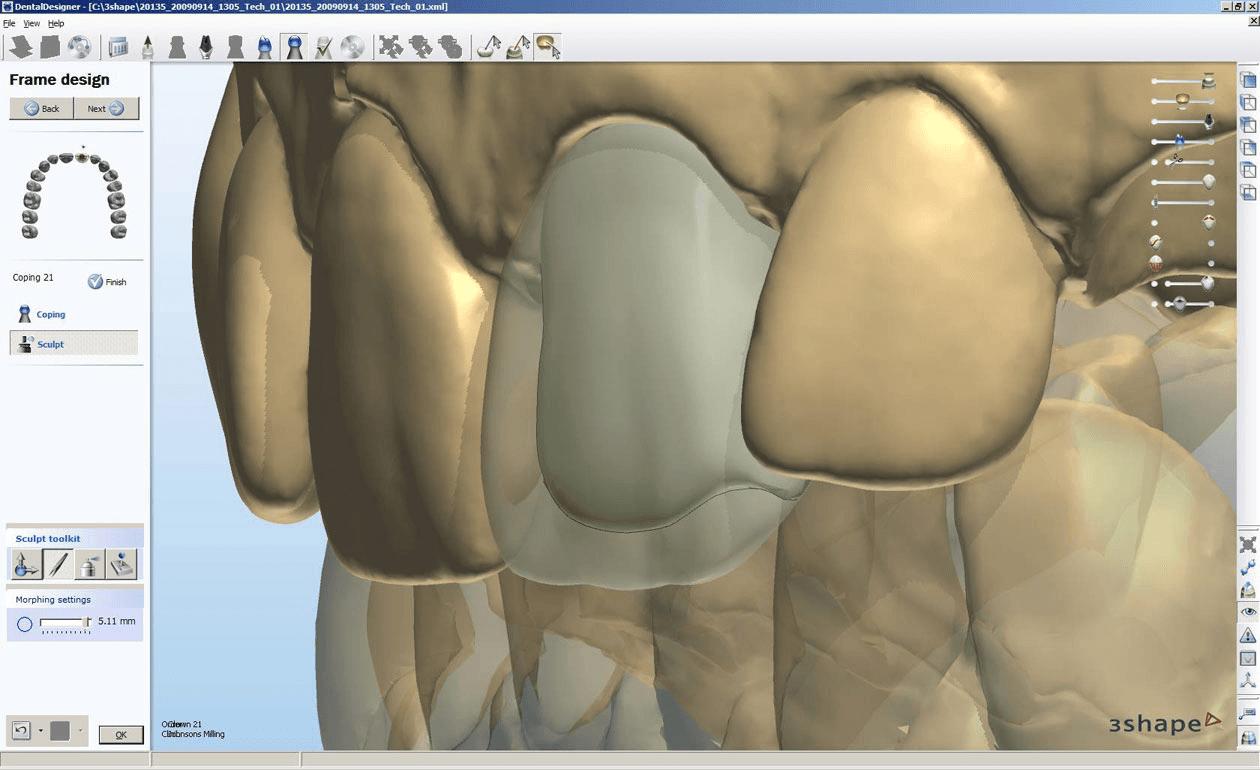
A crown being designed digitally on screen at the Wessex lab in Poole
On our benches in Poole

From sectioned die to fired shade, here

It starts with your impression or scan, cast in high-accuracy crown stone with Pindex sectioned dies that pin each die so nothing moves and the margins stay true. The restoration is then designed digitally, with contacts and occlusion planned before anything is cut.

Zirconia and E.max are milled here, on our own machines, and zirconia is sintered at around 1500 degrees, which is what turns a chalky milled blank into the hard, dense material that goes in the mouth. Cobalt-chrome and metal substructures are cast in-house. Finally it is hand-finished and stained to shade, and back to you to cement.

Zirconia, E.max and the digital chain all happen under one roof, which is the part that matters commercially. Cobalt-chrome substructures are cast for us by Skillbond, and we will always tell you which part of a case is ours and which is theirs.

  • Pindex sectioned diesPinned and sectioned so the margins are true.
  • Designed digitallyContacts and occlusion planned before anything is made.
  • Milled and cast in-houseOn our own machines, not factored out to a production lab.
  • Sintered at around 1500 degreesThe firing that gives zirconia its density.
  • Hand-finished and stained to shadeThen back to you to cement.
Difficult shades

Shade matched under a daylight-simulating light

Anterior shade matching is where cases are won or lost. We take and check shade under a daylight-simulating light, so what we see at the bench is what the patient sees in daylight, not under a warm surgery bulb.

It is a dentist-exclusive service and it is one of the reasons difficult anterior single units come back right the first time. If a shade is genuinely tricky, we would rather have the conversation than guess.

A crown being shade-matched under a daylight-simulating light
The specialist

A career-long crown and bridge specialist

Crown and bridge here is led by a technician who has only ever done crown and bridge, in highly critical laboratory settings. It is not a sideline. It is all she does, day in and day out.

For a practice, that means consistency: predictable contacts, clean margins and a finish you can hand a patient with confidence. And you can talk to the person who made it.

A specialist technician hand-finishing a crown at the bench
Honest limits

Where zirconia is the wrong answer

The question everyone asks and no laboratory page answers. Zirconia is very strong, and that strength is also its trade-off: it is harder than natural enamel, so on a heavy bite the opposing tooth is what gives. It needs a certain thickness to work, so the tooth has to be prepared for it. And a layered crown has porcelain on the outside that can chip, in a way a monolithic one cannot.

On looks, a monolithic posterior unit is built for strength rather than beauty, and for a demanding anterior single unit we would often rather make an E.max. Multi-layered zirconia closes most of that gap, and "most" is the honest word.

And however well we make it, the seat and the cement are the dentist's. A crown is only as good as the preparation underneath it.

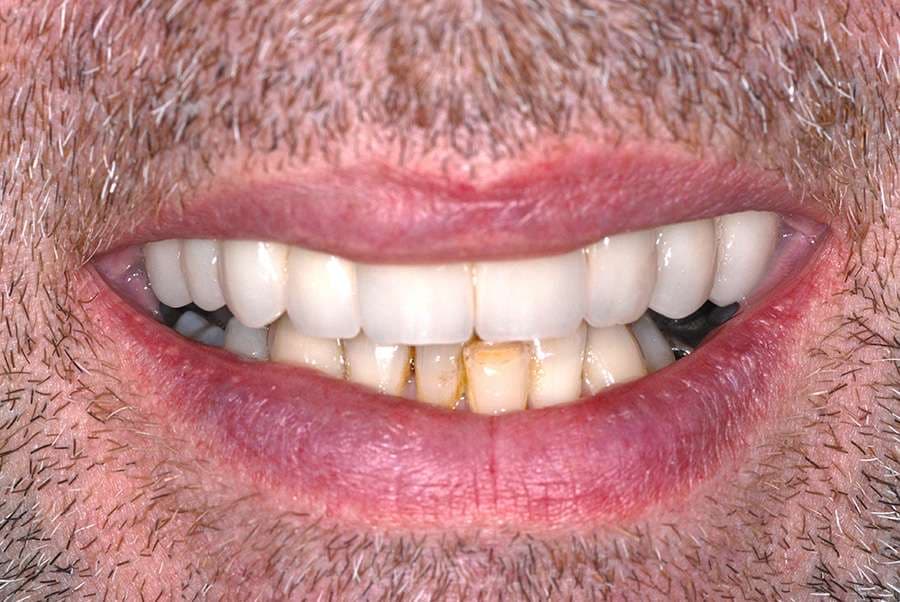
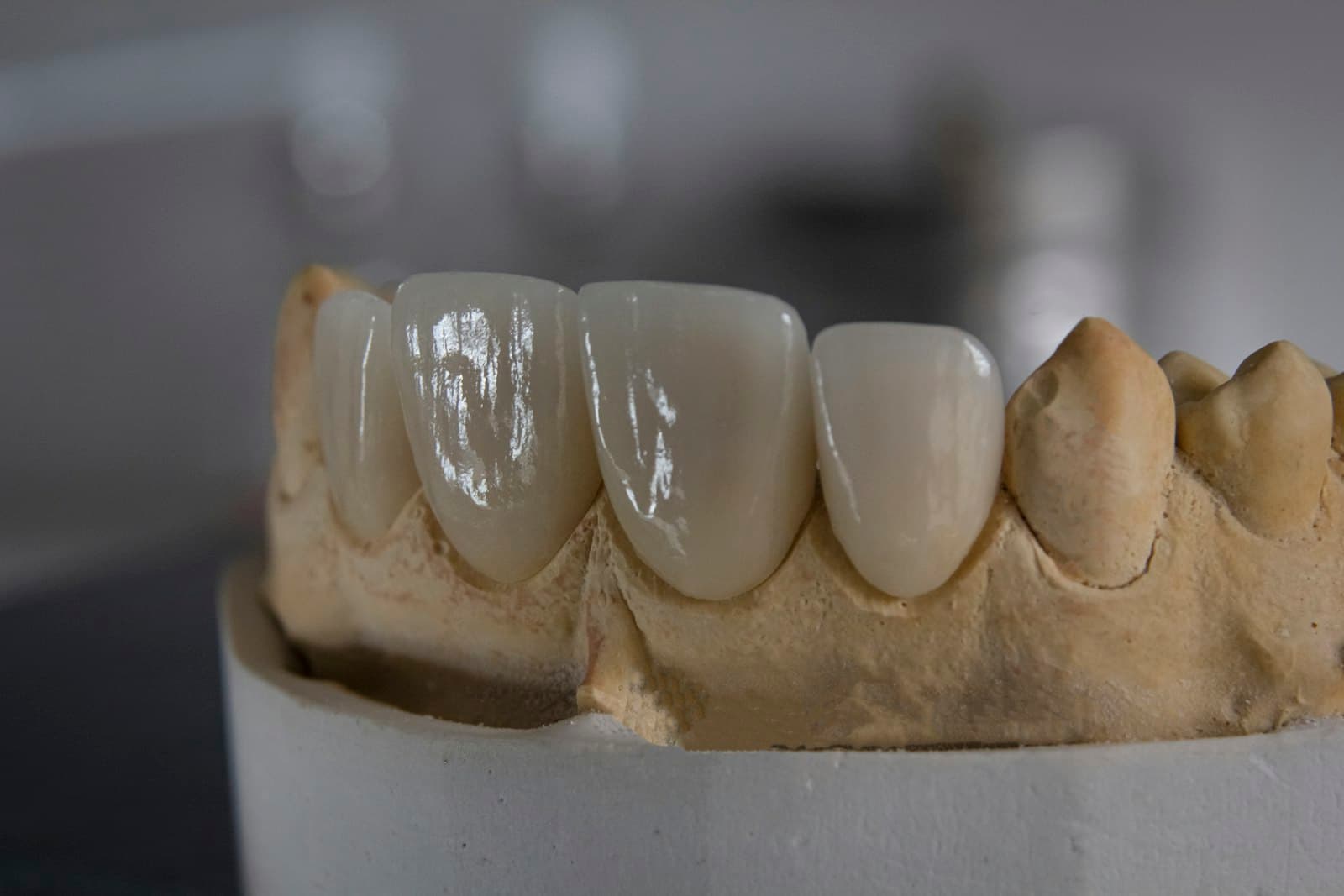
Finished full-contour crowns on the working model
  • 70+ yrsEstablished laboratory
  • In-houseMade on our own benches
  • DAMASRegistered lab
  • GoogleRated by our patients
Finished work

The standard we send back

A look at the crown and bridge work that leaves the Poole lab.

Illustrative placeholder imagery. Photographs of our own finished work are added at launch.

Plain answers

Questions about this service

No jargon, no pressure. If your question is not here, call the lab and a technician will talk it through.

Which materials and systems do you work with?
Multi-layered zirconia is the everyday go-to, alongside E.max, bonded and cast metal, composite, G-Cam graphene-reinforced composite, PMMA temporaries and diagnostic wax-ups. We cover private and NHS. The capability table above sets out which suits which indication. PEEK is on our menu too, but as a metal-free denture framework rather than a crown and bridge material.
My crown has come off. Can you cement it back in for me?
No, and we would rather say so plainly. Crowns and bridges are permanent restorations, cemented in place, and fitting them is clinical work that belongs to a dentist. We cannot fit or re-cement any permanent restoration at the laboratory, so a crown that has come off needs to go back to the dentist who placed it. If you also wear a denture, that side we can look after here, and we are glad to work quickly alongside your dentist so you are not left waiting.
What is your turnaround?
About ten working days on crown and bridge work. If a case is urgent, talk to us and we will tell you honestly what is possible rather than over-promising.
Do you take digital scans or only impressions?
Both. We take STL files from any intraoral scanner and we still accept conventional impressions, so there is no need to change how you work to send us cases.
Zirconia or E.max, which do you recommend?
As a rule, multi-layered zirconia for strength across single units to full-contour bridges, and E.max where aesthetics lead on anterior single units, inlays, onlays and veneers. For a specific case, tell us the tooth and the demands and we will advise.
What is multi-layered zirconia, and how is it different from monolithic zirconia?
Both are zirconia. Monolithic means milled from one solid piece with nothing layered over it, which makes it about as chip-proof as a crown gets. Multi-layered is milled from a blank whose shade and translucency already vary through its depth, so it lands closer to a natural tooth without porcelain on top. That is why it is our everyday go-to. Monolithic still has the edge where the bite is punishing and looks matter less.
What is the downside of zirconia crowns?
It is harder than natural enamel, so on a heavy bite the opposing tooth is what wears. It needs a certain thickness, so the tooth has to be prepared to make room. A layered crown has porcelain that can chip, which monolithic avoids. And for a demanding front tooth, E.max often still looks better. Any lab telling you zirconia has no downsides is selling, not advising.
How long will a zirconia crown last?
Not a number a laboratory can honestly give you. Zirconia is one of the most durable materials available and the crown is very unlikely to be what fails. What decides the outcome is the tooth underneath, the preparation, the cement and how it is looked after, all of which sits with the dentist.
How much does a zirconia crown cost?
If you are a patient, we cannot tell you, and anyone quoting a national figure is guessing. We are the laboratory: your dentist commissions the crown from us and sets your fee at their practice, taking in their own time, the fitting and their overheads. They are the only person who can give you a real number. If you are a practice asking what we charge, get in touch and we will send our trade price list.
Why send crown and bridge to you rather than keep it in-house or use another lab?
Almost everything is made in-house, so there is very little sub-contracting and no lost control. Zirconia and E.max are milled here, and cobalt-chrome substructures are cast for us by Skillbond. You get a career-long specialist, in-house milling, daylight shade matching and a real person to talk to about each case. That combination is hard to match locally.
What is the difference between a crown and a bridge?
A crown restores a single tooth. A bridge replaces missing teeth by joining to the teeth or implants either side of the gap. We make both, including Maryland bridges with a bonded wing.
For dental practices

Start sending us your crown, bridge and zirconia work

Speak to the technician who will make your cases. Local courier collection or nationwide post, on a reliable ten day turnaround.

Book a Free Consultation